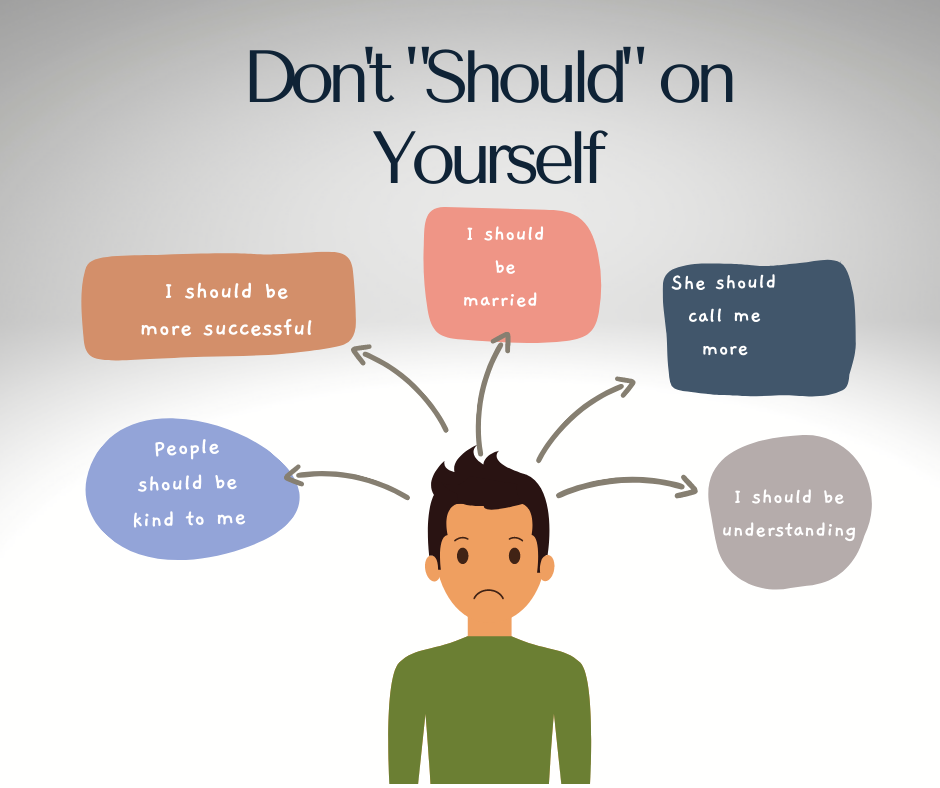
Having values, goals, principles, and expectations is normal. But when these healthy inclinations become internal rules, such as “shoulds” and “musts,” then there may be a big problem. A “should” statement is a type of negative thinking pattern that is rigid and places unreasonable demands and pressure on a person and can influence a range of difficult emotions, such as doubt, failure, incompetence, and guilt, to name a few. This type of faulty thinking is a form of cognitive distortion and can create conditions in a person’s perception that can be unhealthy.
According to theory based in cognitive therapy, thoughts play a huge role in how we feel and behave. Negative thinking and “should” statements often cause people to develop stress and can lead to other mental health conditions. Some of the other words associated with these types of statements include “must” and “ought.”
People who have anxiety and/or depression often use these types of statements when describing things that are happening in their lives or when describing themselves. They feel that they should or must do or not do something. When they fail or fail to act, it can lead to a more negative and pessimistic view of life. Others might find that the use of these types of statements can cause increased anxiety, as well as avoidance behaviors.
These types of statements can be present in many areas of our lives. Let’s take a look at a few examples.
- “I should be further along in my career by now.”
- “I should be a better parent.”
- “I must never make mistakes.”
- “I ought to feel grateful all the time.”
Although these statements might seem harmless to some, they have the potential to cause unneeded pressure and distress. They are negative ways of thinking and can often make a person feel frustrated when they don’t do or achieve what they put in their “should” statements.
Overcoming the “Shoulds”
It can be difficult to break away from using these pesky negative statements. Often, they become commonplace in our lives and unconsciously influence us. So you might not even realize that you are “shoulding” on yourself (pardon the pun). Fortunately, you can do something about it — begin by noticing the “shoulds” as they arise, questioning where the rule came from, and replacing it with a kinder, more flexible statement (e.g., “It would be nice if…” or “I’d prefer to…”).